
| Basis | Multiplier | Qualifying total |
|---|---|---|
| RM50 bonus only | 20× | RM1,000 |
| RM100 deposit + RM50 bonus | 20× | RM3,000 |
| RM100 stake at 20% contribution | Contribution only | RM20 progress |
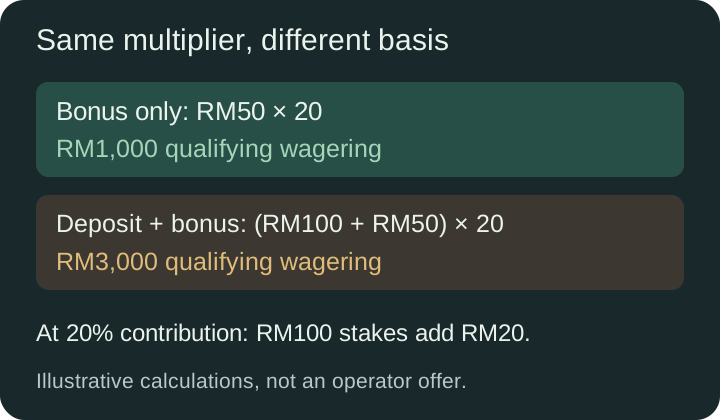
Find the basis before multiplying
A headline such as “20× wagering” is incomplete without the amount to which 20 applies. The basis might be the bonus alone, the deposit plus bonus, or another balance defined in the terms. Two offers with the same multiplier can require very different totals of qualifying activity.
Wagering measures stakes that count under the promotion, not deposits or profits. A requirement of RM1,000 means RM1,000 in qualifying stake value under the stated accounting rule. It does not mean you will have RM1,000 to withdraw, and it does not require or justify depositing that amount. Outcomes change the balance available as play continues.
Example 1: a bonus-only calculation
Suppose an illustrative offer gives a RM50 bonus with a 20× requirement on the bonus only. The calculation is RM50 × 20 = RM1,000 of qualifying wagering. The deposit is not included in this particular calculation because that is how the example defines the basis.
A RM10 eligible stake contributing at 100% would add RM10 towards that total, whether the round wins or loses, if the terms count stakes that way. Ten such stakes would contribute RM100. This explains the meter; it is not a recommendation to repeat them. The balance can run out before the requirement is reached.
Example 2: deposit plus bonus
Now suppose a RM100 deposit receives a RM100 bonus and the requirement is 20× deposit plus bonus. The basis is RM200, so the total is RM200 × 20 = RM4,000. If the same multiplier instead applied only to the RM100 bonus, the total would be RM2,000.
That difference is why a comparison based on the percentage or multiplier alone is misleading. Write down the complete expression, including brackets: (deposit + bonus) × multiplier. The example does not imply that deposited cash is always restricted; the actual terms define which balances are affected and in what order they are used.
Example 3: different contribution rates
An illustrative RM1,000 requirement with 100% contribution receives RM100 credit from RM100 of eligible stakes. At 20% contribution, that same RM100 stake total receives RM20 credit. If every eligible stake contributed at 20%, RM5,000 of stakes would be needed mathematically to supply RM1,000 of qualifying credit.
A mixed example is easier to follow in two lines: RM200 of stakes at 100% adds RM200; RM500 at 20% adds RM100. The combined contribution is RM300, leaving RM700 against the illustrative RM1,000 requirement. The stake totals and contribution totals are different columns. Neither calculation says those activities are offered or allowed by a brand.
Example 4: excluded activity
Imagine RM100 staked on an activity excluded by the terms. At 0% contribution it adds nothing to the qualifying total, even though money was committed and the result changed the balance. The requirement would remain unchanged. A displayed stake history and a qualifying-wagering meter can therefore show different totals without either being a simple addition error.
Some terms go further than zero contribution: an excluded activity may be prohibited while using the offer and could affect the bonus or resulting balance. Maximum-stake clauses, prohibited patterns and optional feature purchases also need separate attention. An activity that counts partially is not the same as one that breaches the conditions.
Example 5: expiry and withdrawal restrictions
Suppose the illustrative RM1,000 total has RM750 credited before its stated deadline. RM250 remains unmet. The arithmetic does not automatically extend the deadline or decide what happens to cash, bonus and winnings at expiry. The terms must explain those effects.
Likewise, reaching the wagering total may still leave a withdrawal cap, account review, minimum withdrawal or other condition. Consider an illustrative term capping a bonus-derived withdrawal at RM200: a displayed RM300 bonus-derived balance would not by itself establish a RM300 withdrawal entitlement. That example explains the distinction between a balance and an eligible withdrawal, without promising a particular forfeiture or payment outcome.
Track progress without changing your budget
When an offer has a meter, compare its definition with the terms. Record the starting requirement, qualifying credit and remaining amount. If a contribution is missing, use the round reference and rule concerned to ask a specific question. A rough estimate based on all stakes can be wrong when the rates differ.
The remaining figure is an obligation under an optional offer, not a spending target. Increasing stakes or adding funds to reach it can magnify losses. An expiry countdown does not make further play necessary. It can be reasonable to decline or leave an offer, subject to understanding any cancellation effects on the existing balances.
Questions the actual terms must answer
Which balance is the basis? Which activities count, and at what rate? Are there maximum stakes or excluded features? When does the time window start? What happens on cancellation, expiry or an early withdrawal request? Are winnings capped or subject to another condition?
Save the version that applied when you opted in. If a headline and detailed clause disagree, resolve that disagreement before taking the offer. The bonus-terms guide addresses balance definitions and restrictions; the eligibility guide addresses who can enter; the welcome-offer guide explains enrolment order. This article’s job is the calculation, not deciding eligibility or promising that an offer is worthwhile.
The essential distinctions
- Write the basis in brackets before applying the multiplier.
- Separate actual stakes from the amount credited towards wagering.
- Zero contribution and prohibited activity are different conditions.
Questions about this topic
Does 20× mean the deposit is counted?
Only if the terms include it in the calculation basis. Bonus-only and deposit-plus-bonus calculations can produce different totals.
Do wins reduce the required total?
A requirement generally tracks qualifying activity, not net profit, but the terms define its accounting. A win does not by itself establish that the condition has been met.
Should I add money to finish the requirement?
The remaining requirement is not a reason to exceed your own budget. Understand cancellation and expiry terms and consider stopping instead of committing more money.